Background
It was probably a fascination with electricity that first got me interested in solar. The thought of generating free electricity, the science of the photovoltaic concept, how it works and eventually how much electricity could be generated. That's me, many times wanting to know how something electrical or mechanical actually does what it does. When others say, "if it works, just leave it alone", I need to know more.
Progression to Current Day
So the research began by watching video after video, visiting and reading manufacturers and parts vendors websites until the concepts began to sink in. I saw that some DIY's were building their own systems comprised of components and wires attached to a sheet of wood or other material and in some cases connected with heavy gauge cables to a bank of batteries. This seemed like a lot to put together for someone like me who has limited knowledge and there is always the issue of safety. Does a beginner want to build a system on their own?
And then there were the all-in-one solar battery/generator invertor chargers. Where all the "boarded" components are put together in a box, you could say, with an added battery for the storage of the electricity that's generated. The battery technology was going to be a whole other topic to explore, study, and understand.
This was the learning scenario on and off for a long time while not sure how to make the next or really the first move. Wanting to put some of my new knowledge into action and finally purchase something while making the best choice. A list was made of all the factors involved with picking the equipment to purchase for
an entry level start up project, such as:
1. Reason for buying the gear.
2. What the initial investment was trying to accomplish.
3. Affordability.
4. Safety of the gear purchased and the use of it in my home.
5. How would the gear be tested.
6. What future expansion or progression could there be if we had good results?
*Note: On the Issue of Safety:
When experimenting with solar panels and systems you really have to consider the issue of safety:
-Is this equipment UL or CE listed to be safe for me to operate and then safe in a vehicle, boat, or
house?
-Do we really want to put together a system of our own construction that then has no safety
certifications?
With the all the above issues taken into account, the choice was made to go with an all in one box with a safety certification. I looked at multiple manufacturers products and if they would work with my system design. I was only going to afford to build a small system but it could be more effective because we would be able to use or save all the electricity we generated. A big concern was thinking about all the liability that comes into play if an issue and then event occurs and never wanting to be in that position. And if something unfortunate does happen, being covered by insurance.
Current Situation
After looking at many "solar generators" and comparing specifications and price, EcoFlow's Delta Pro was the winner. The unit was an all-in-one comprised of:
- A solar panel DC voltage power inverter that supplies AC for home use.
- 3.6 kw of AC output load capacity.
- 3.6 kw of battery storage with a Battery Management System.
- Multiple safety protections including a fire-proof battery case.
- Affordable at under $2000.
- Expandable, when paired with a 2nd unit to create 7200 watts load capacity at 240 vac.
The cost was reasonable for at least one or the first unit which could be expanded upon but still used immediately. It was connected to 10 circuits in the electrical service panel using a manual transfer switch. A small solar array was set up in the backyard for testing of the solar generation.
The entire system was comprised of 12, 315 watt mono-crystalline solar panels for full solar generation of 3.6 - 3.9 kw. This appears to be a small system in comparison to most others. But, our system was not going to be grid-tied and selling back kilowatts to the local municipality. We were to be using the batteries to store any excess power generated for our own use.
Proposed Changes
After testing during the summer of 2025, the limitations of direct sunlight and bright light became more obvious. Having someone, some video, or article tell you about the limitations of solar generation versus actually experiencing them is two different stories. In backyard testing the results showed that in our situation there was only about 3-4 hours of full direct sunlight on a sunny day. With a system of 12 panels in only a few hours of full sun, getting some generation on cloudy but bright days or mornings/late afternoons of maybe 400-600 watts, our total generation was not going to exceed 10 kw per day. We needed more hours of sun and bright light.
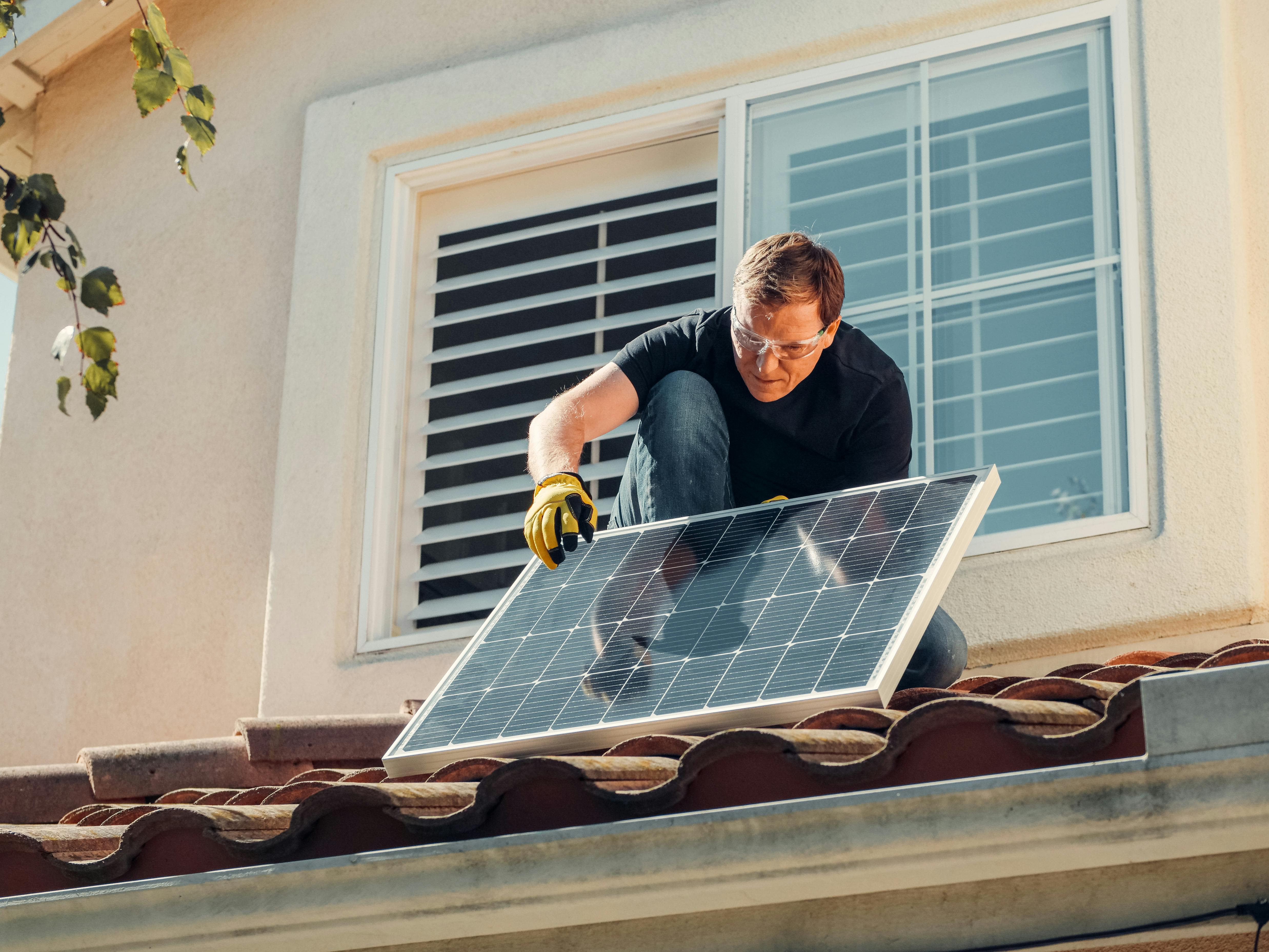
So, the decision was made to move the system to the roof of the house to have the most hours of partial or full sun or bright cloudy light to maximize solar power generation. We'll need to permit the installation and have a licensed electrician install the automated panel.
What's planned is abandoning the manual transfer switch and moving to an EcoFlow Smart Home Panel. This device allows for 12 circuits of your choice to be powered up by the EcoFlow Delta Pro's with Smart Extra Batteries system, allowing usage of solar power generation for home loads while simultaneously charging the batteries with the excess. The panel features an automatic transfer switch that converts to grid power should the battery charge levels drop to your pre-set level.
It should be noted that this is not a grid tied system. Meaning it does not synchronize to the utility power grid then feed and sell excess power for a wholesale price. Grid tied systems must sync to the grid and require more complex circuitry, installation, and permitting.
Final Thoughts
That brings us to the current day. Waiting for the spring weather to break to begin the process of approaching the local municipality with our plan for permits and to find a competent electrician.
Italic paragraph is available.